

In the modern digital economy, your custom logo serves as the absolute psychological anchor of your corporate identity. It is the visual representation of your brand value and customer promise. However, creating an impactful visual mark using a logo maker or professional designer is an intricate balancing act. A single architectural misstep in your design can silently alienate potential clients, erode digital trust, and cost your enterprise thousands of dollars in future rebranding.
1. OVERCOMPLICATING THE VISUAL DESIGN STRUCTURE
Many ambitious entrepreneurs fall victim to the 'kitchen sink' syndrome, desperately trying to cram their company history and multiple product lines into a single tiny emblem. Using a free logo maker incorrectly can result in overcomplicated logos that degrade into an unrecognizable smudge on social media. Prioritize hyper-minimalism and cognitive simplicity to ensure your custom logo design scales perfectly across all digital platforms.
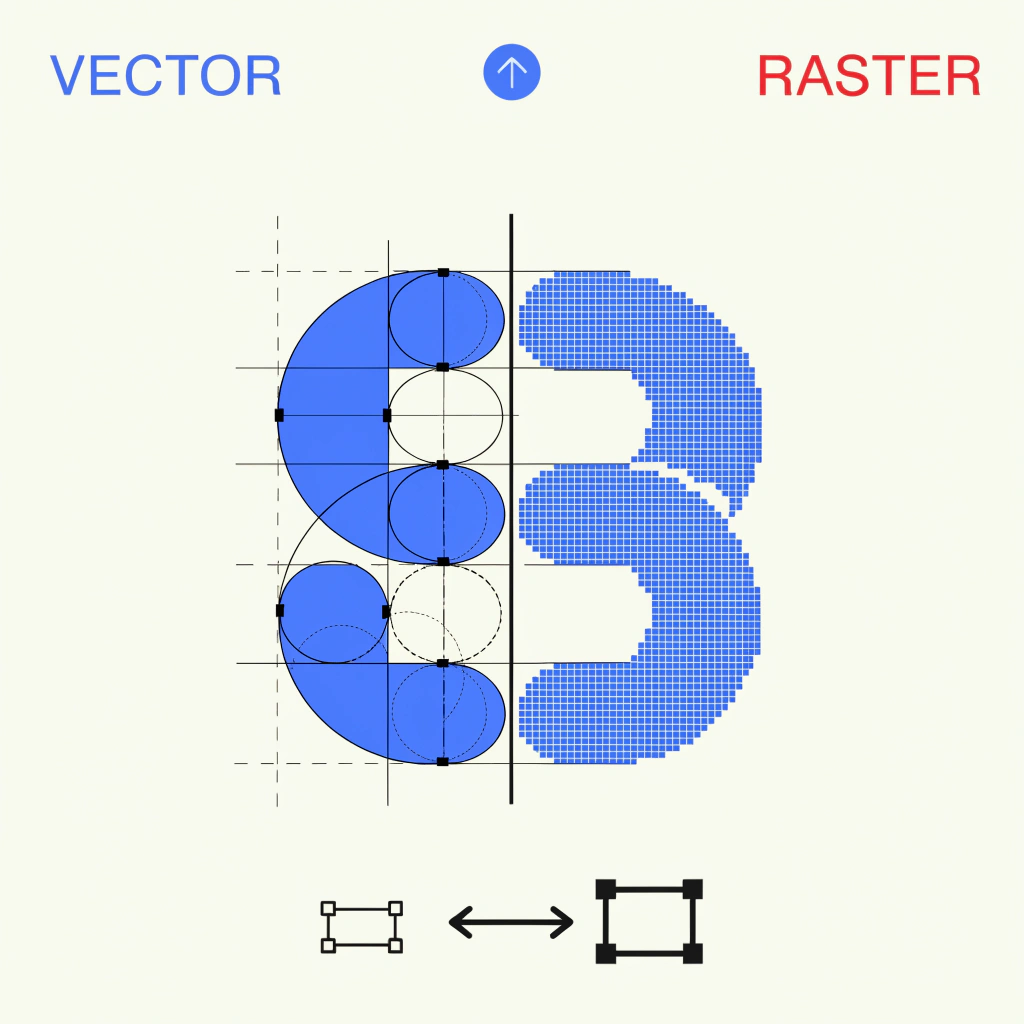
2. DESIGNING IN RASTER FORMATS INSTEAD OF MATHEMATICAL VECTORS
THE MISTAKE: Utilizing consumer-grade pixel-based photo editing software instead of professional, vector-based design infrastructure is a catastrophic technical error. Raster files (such as PNG and JPEG) are built using a rigid, fixed grid of colored pixels. The moment you attempt to enlarge a raster logo to fit a physical storefront sign, corporate vehicle wrap, or conference billboard, the artwork instantly shatters into a highly unprofessional, blurry, and pixelated mess. THE FIX: Your brand assets must always be natively engineered and exported using professional vector graphic software. Vector graphics rely on sophisticated mathematical formulas rather than static pixels, meaning they can be infinitely scaled from a tiny high-density smartwatch face up to an enormous highway billboard without losing an atom of crispness. Ensure your master deliverables directory contains uncompressed AI, EPS, and clean web-ready SVG source files.
3. FALLING VICTIM TO SHORT-LIVED VISUAL TRENDS
THE MISTAKE: Designing an corporate identity around fleeting, hyper-hyped internet aesthetics—such as neon gradients, glitched typography, or ultra-specific geometric distortions—is a recipe for rapid visual obsolescence. While a trendy layout might look fresh and exciting on visual portfolio websites for a few months, it will inevitably make your business appear incredibly dated, out-of-touch, and stale within less than two fiscal years. THE FIX: Aim directly for timeless, multi-decade longevity by anchoring your visual layout in fundamental principles of balanced symmetry, golden ratio geometry, and classic composition theory. Ask yourself a critical strategic question: 'Will this exact visual concept still command absolute authority and look professional in 2036 and beyond?' If the core aesthetic relies heavily on a current social media subculture, discard it immediately and focus on timeless conceptual endurance.
4. POOR FONT SELECTION AND TYPOGRAPHY OVERDRIVE
THE MISTAKE: Typography dictates the distinct audible 'voice' of your brand name. A highly frequent mistake is combining multiple clashing font families within a single logo lockup—such as mixing a playful script font with a rigid, geometric tech sans-serif. Alternatively, choosing overly stylized, illegible fonts simply because they look artistic completely destroys the functional legibility of your corporate name at casual glances. THE FIX: Keep your typographical composition strictly limited to a maximum of two harmonized typefaces that possess complementary structural characteristics. Select a primary font that cleanly communicates your core brand personality (e.g., a trustworthy Serif for wealth management or a sharp Sans-Serif for modern SaaS) and ensure the spatial tracking and kerning are meticulously adjusted so that the text remains perfectly legible from ten feet away.
5. RELYING TOO HEAVILY ON COLORS AND GRADIENTS TO MAKE AN IMPACT
THE MISTAKE: If a visual design requires a complex, multi-layered color gradient or specific neon shades to be understandable, it is an fundamentally flawed logo. Throughout the daily lifecycle of a business, your brand mark will inevitably be subjected to extreme print and technical limitations, such as black-and-white newspaper advertisements, single-color thermal receipt printing, physical laser engraving, or embossed cardboard packaging. THE FIX: Always execute your preliminary creative sketching phases entirely in solid black and solid white. A truly robust and elite brand icon must maintain its complete communicative power, structural contrast, and aesthetic authority when all color depth is completely removed. Once the flat silhouette is mathematically perfected, you can strategically overlay your corporate color palette using optimized RGB and CMYK color profiles.
6. LACK OF OMNI-CHANNEL RESPONSIVENESS AND DIGITAL SCALABILITY
THE MISTAKE: Operating with a single, static, unyielding logo layout across the entire modern internet ecosystem is a major operational bottleneck. A wide, horizontal corporate layout that looks fantastic on a desktop computer screen becomes completely unreadable and compressed when squeezed inside a circular mobile app profile icon or scaled down to a tiny favicon. THE FIX: Implement a modern, dynamic 'responsive logo system' that adapts gracefully to any viewport orientation. Work with your design infrastructure to construct a tiered collection of brand assets: a complete primary lockup for large displays, a slightly simplified stacked layout for medium viewports, and a hyper-condensed, minimalist 'brand mark' or monogram consisting of just a singular letter or core icon for ultra-compact digital spaces.

7. DESIGNING FOR YOUR PERSONAL PREFERENCES INSTEAD OF THE TARGET AUDIENCE
THE MISTAKE: Many business owners treat the corporate branding process as an exercise in personal artistic vanity. They force designers to utilize their personal favorite colors, childhood symbols, or niche artistic tastes, completely ignoring the psychological profile, age demography, and cultural expectations of their actual paying customer base. THE FIX: Detach your personal ego entirely from the creative decision-making funnel. Conduct deep, data-driven consumer behavior research to map out what specific visual cues, color palettes, and emotional tones trigger subconscious trust and conversion within your core target demographic. If you are launching a B2B cybersecurity company, your branding must project indestructible security and absolute institutional stability, even if your personal taste leans toward vibrant, playful pastels.
8. USING CLIPART, STOCK IMAGERY, OR GENERIC TEMPLATES
THE MISTAKE: Downloading cheap, mass-produced stock icons or generic pre-made template graphics from public asset networks to use as your corporate logo is a catastrophic shortcut. Because thousands of other low-budget businesses have access to the exact same asset databases, you will inevitably end up with an uninspired visual identity that completely dilutes your market presence and makes you look like a generic, untrustworthy entity. THE FIX: Invest in original custom concepts, whether through advanced automated specialized branding engines or direct collaboration with skilled human visual artists. Your corporate mark must be entirely unique to your business to ensure that when a customer sees it, they associate it exclusively with your exceptional product quality and customer service, rather than confusing your brand with a dozen random local competitors.
9. FALLING INTO THE TRAP OF GENERIC CLICHÉS AND COMPETITOR COPYING
THE MISTAKE: Falling victim to industry-specific visual clichés is a massive branding pitfall. Real estate agencies constantly use the exact same predictable abstract roof outline; environmental companies default to a generic green leaf; tech startups default to interconnected network dots. This collective lack of imagination results in an industry-wide sea of sameness where no individual brand can stand out. THE FIX: Conduct a comprehensive visual audit of your top twenty direct marketplace competitors, print out their logos, and map them onto a competitive matrix. Strategically choose a conceptual direction that completely subverts those tired industry tropes. If every competitor in your niche uses cold, clinical corporate blues, pivot toward sophisticated deep plums or warm, authoritative terracottas combined with unexpected metaphorical iconography to seize immediate visual ownership of the market.
10. COMPLETELY IGNORING DIGITAL DARK MODE OPTIMIZATION
THE MISTAKE: With a massive percentage of modern internet users explicitly preferring dark mode interfaces on their mobile devices and operating systems, ignoring how a logo performs on dark backgrounds is a critical oversight. A logo engineered with thin, solid black typography or dark gray icon elements completely vanishes, loses all contrast, and becomes entirely invisible when placed on a dark mobile app background or website footer. THE FIX: Meticulously design and test your logo within a multi-background sandbox environment. If your primary design contains dark elements, explicitly engineer an official 'inverted' or light-mode alternative version. This often involves applying subtle, mathematically calculated white or glowing strokes, or automatically hot-swapping the text elements to pure white or high-contrast silver when a dark web environment is dynamically detected by CSS media queries.
11. OVERLOOKING LEGAL VERIFICATION AND INTELLECTUAL PROPERTY TRADEMARKS
THE MISTAKE: Launching a brand globally without performing a rigorous legal trademark and intellectual property clearance search is a massive operational hazard. Discovering that another registered corporation within your market vertical already owns the exclusive legal rights to a highly similar visual mark three years into your business journey will result in an absolute disaster: forced immediate destruction of all signage, packaging, and marketing materials, accompanied by devastating financial damages. THE FIX: Before committing any capital to embedding a new design into your digital infrastructure, run the proposed concept through official government trademark databases (such as the USPTO, WIPO, or your local patent office) alongside deep reverse-image searches. Secure a formal legal clearance audit to guarantee that your visual identity is completely unencumbered, paving a safe path for secure trademark acquisition and robust enterprise valuation.
12. SKIPPING EMPIRICAL FEEDBACK AND OBJECTIVE USER TESTING
THE MISTAKE: Designing in a complete echo chamber, where the only opinions evaluated belong to you and the immediate creator of the artwork, creates a dangerous blind spot. Because human perception is highly subjective, an icon that looks like an abstract flower to you might inadvertently resemble an offensive symbol, a competitors hidden logo, or an entirely inappropriate anatomical shape to the general public. THE FIX: Subject your final two or three creative design directions to rigorous, blind empirical consumer testing. Utilize digital feedback panels, distribute unbranded surveys to target demographic groups outside your immediate social circle, and explicitly ask unbiased testers what their immediate, unfiltered psychological associations are when looking at the graphic for exactly three seconds. This objective data filter will catch hidden perceptual flaws before they reach the public market.