
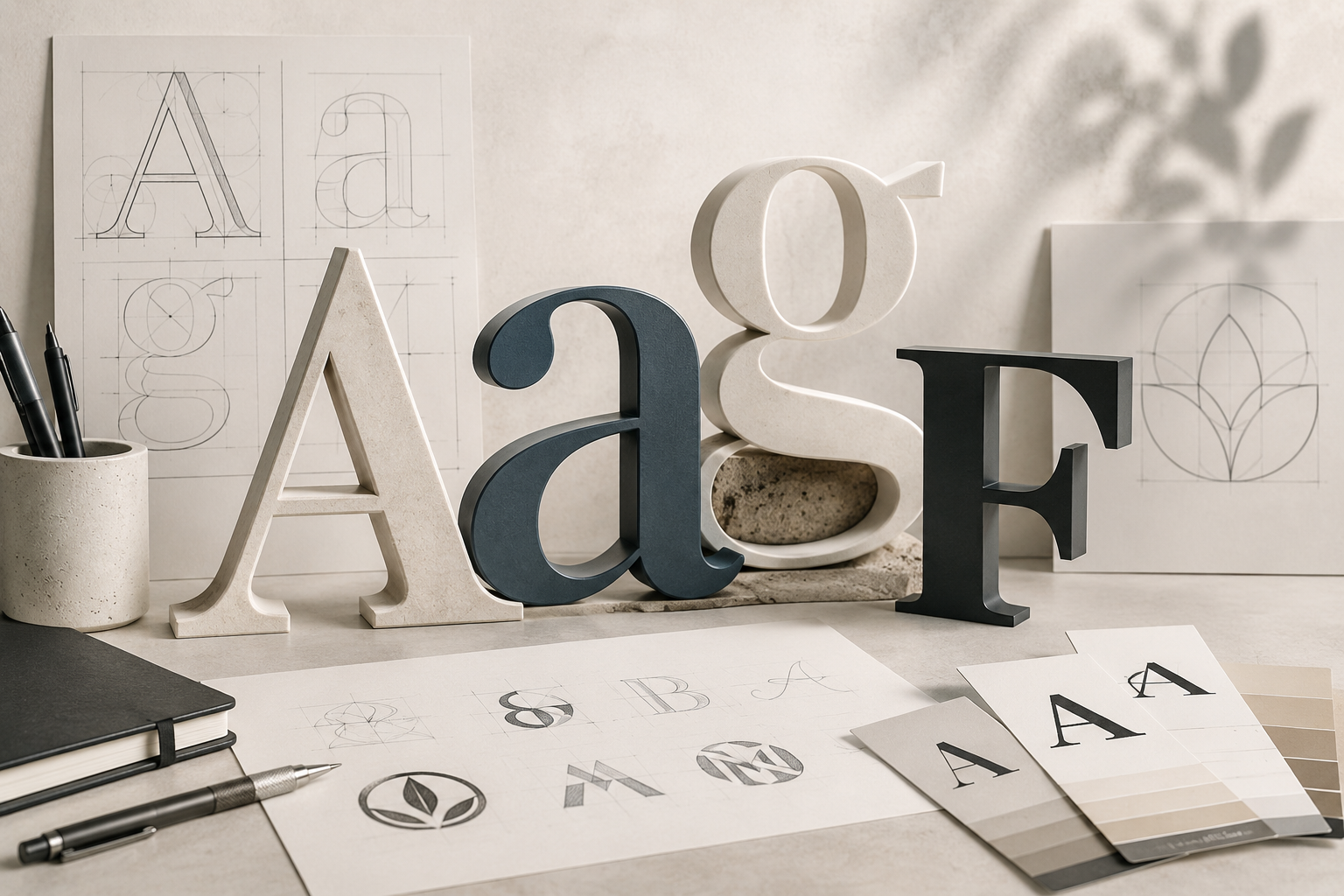
In the highly analytical world of corporate branding, typography is far more than just a method for displaying letters on a screen. Typography is the visual tone of voice for your brand. When you speak to a customer, the words you use matter, but the tone of your voice dictates how those words are received. In visual design, your chosen font is that tone of voice. Selecting the best fonts for logo design is an absolutely critical architectural decision that can either elevate your brand to the heights of premium luxury or relegate it to the bargain bin of amateur businesses.
Many business owners mistakenly believe that the symbol or icon is the most important part of a logo. However, the majority of the world's most successful and recognizable corporate identities—such as Google, FedEx, Coca-Cola, and Disney—are entirely typography-based (known as logotypes or wordmarks). A poorly chosen font can destroy trust, ruin legibility on mobile devices, and completely misalign with your target demographic's psychological expectations. In this comprehensive, SEO-optimized typography guide, we will dissect the major font families, reveal the psychological triggers of each, and guide you toward selecting the absolute best font for your corporate logo.
1. WHY FONT CHOICE IS CRITICAL FOR BRAND IDENTITY
The human brain is a highly advanced pattern recognition machine. Over centuries of reading printed text, our brains have developed deep, subconscious associations with specific styles of lettering. When a consumer looks at your logo's font, their brain instantly categorizes your business. If the font is sharp, geometric, and minimalist, the brain categorizes the brand as modern, efficient, and tech-forward. If the font is highly decorative and cursive, the brain categorizes the brand as artistic, personal, or luxurious.
A catastrophic branding error occurs when there is a dissonance between the visual font psychology and the actual business offering. If a high-security cryptocurrency exchange uses a playful, comic-style font, the consumer's brain registers a severe lack of trust, resulting in an immediate loss of potential revenue. Your font choice must perfectly synchronize with your brand's core values, industry standards, and the specific demographic profile of your ideal paying customer. Every curve, serif, and line weight must be intentionally chosen to project your desired corporate authority.
2. SERIF FONTS: TRADITION, TRUST, AND ELEGANCE
Serif fonts are the oldest and most traditional style of typography. A 'serif' refers to the small, decorative strokes or 'feet' attached to the ends of the larger letters. Historically used in book printing and newspapers, Serif fonts carry immense historical weight. Psychologically, Serif fonts project absolute tradition, established heritage, unwavering reliability, and intellectual authority. They tell the consumer: 'We are a serious, established institution that you can trust with your life or your money.'
Because of these deep-rooted psychological associations, Serif fonts (such as Garamond, Times New Roman, and Baskerville) are the undisputed kings of specific industries. Law firms, Ivy League universities, traditional financial institutions, and established broadsheet newspapers almost exclusively use Serif fonts in their logos. Furthermore, high-contrast Serif fonts (where there is a huge difference between the thick and thin parts of the letter) have been adopted by high-end fashion brands like Vogue and Rolex to project supreme luxury, sophistication, and timeless elegance.
3. SANS-SERIF FONTS: MODERN, CLEAN, AND APPROACHABLE
Sans-Serif fonts (literally meaning 'without serif') strip away the decorative feet of the letters, resulting in clean, sleek, and highly geometric lines. In the digital age, Sans-Serif has become the absolute dominant force in global branding. Psychologically, Sans-Serif fonts project modernity, forward-thinking innovation, minimalism, efficiency, and approachability. They represent the cutting edge of contemporary design.
The meteoric rise of Sans-Serif fonts is deeply tied to the technology boom. Fonts like Helvetica, Proxima Nova, and Futura render perfectly on digital screens, maintaining absolute legibility even when scaled down to microscopic pixel sizes on mobile devices. Today, virtually every major Silicon Valley tech giant—from Google and Airbnb to Spotify and Uber—has transitioned their logos to custom Sans-Serif wordmarks. If you are launching a modern SaaS company, an innovative tech startup, or a disruptive digital agency, a robust Sans-Serif font is practically mandatory.
4. SCRIPT FONTS: CREATIVITY, LUXURY, AND ELEGANCE
Script fonts are designed to mimic fluid human handwriting, calligraphy, or artistic brush strokes. These fonts are highly emotive and carry significant psychological weight. Unlike the rigid, objective nature of Sans-Serif, Script fonts are deeply personal, creative, nostalgic, and romantic. They inject a distinct human element into a brand identity, making the company feel less like a faceless corporation and more like an artisan creator.
Script fonts are highly effective for specific niche industries. Boutique bakeries, wedding photographers, artisan coffee shops, high-end cosmetics brands, and creative freelancers frequently use script logos. Think of the Coca-Cola or Disney logos; their custom script fonts are universally beloved. However, a major warning regarding Script fonts: they can be incredibly difficult to read at small sizes. If you choose a Script font for your logo, you must ensure the lettering is not overly complex or tightly wound, preserving legibility across all digital platforms.
5. CUSTOM VS. STANDARD FONTS IN LOGO DESIGN
When designing a logo, you face a critical crossroad: should you use an existing, standard font (like Arial or Helvetica) or commission a completely custom, bespoke typeface? Using standard, pre-installed system fonts is highly dangerous for brand identity. Because millions of people have free access to these exact fonts, your logo will inherently lack originality and look indistinguishable from a generic Microsoft Word document.
To achieve a truly premium corporate identity, you must at the very least heavily modify an existing commercial font. This means converting the font to vector outlines and manually adjusting the letterforms—perhaps cutting an angle into a 'T', joining two letters together, or altering the curve of an 'O'. For enterprise-level corporations, commissioning a completely custom proprietary typeface from a master typographer is the ultimate flex of brand authority, ensuring absolute originality and a legally impenetrable visual trademark.
6. THE RULES OF FONT PAIRING IN LOGOS
Many logos require two different fonts—one primary font for the main company name, and a secondary font for a sub-headline, tagline, or established date. Attempting to pair fonts without understanding typographic harmony usually results in visual chaos. The absolute golden rule of font pairing is achieving high contrast without conflict. Never pair two very similar fonts together (like two different Sans-Serifs that look almost identical); it looks like a mistake.
The most successful and reliable pairing strategy is combining a strong, character-rich Serif font with a clean, neutral Sans-Serif font (or vice versa). This provides a beautiful visual balance. The primary font carries the heavy brand personality, while the secondary, neutral font delivers the supporting information with crystal-clear legibility. Additionally, ensure that you never use more than two font families in a single logo lockup. Three or more fonts instantly destroy the structural integrity and professional tone of the design.
7. TOP 10 BEST FONTS FOR MODERN LOGO DESIGN
While every brand requires a unique approach, several typographic families have proven themselves as the undisputed champions of modern logo design due to their flawless geometry, legibility, and timeless appeal. In the Sans-Serif category, modern classics like 'Helvetica Now', 'Futura', 'Montserrat', 'Proxima Nova', and 'Inter' dominate the tech and corporate landscape. These fonts provide an unbeatable clean slate for modern branding.
For brands seeking tradition and elegance in the Serif category, typefaces such as 'Garamond', 'Baskerville', 'Playfair Display', 'Bodoni', and 'Merriweather' offer profound historical weight and unmatched sophistication. When utilizing an AI logo maker or a professional designer in 2026, requesting these specific font families as a starting point will ensure your brand is built on a foundation of world-class, mathematically perfected typography.