
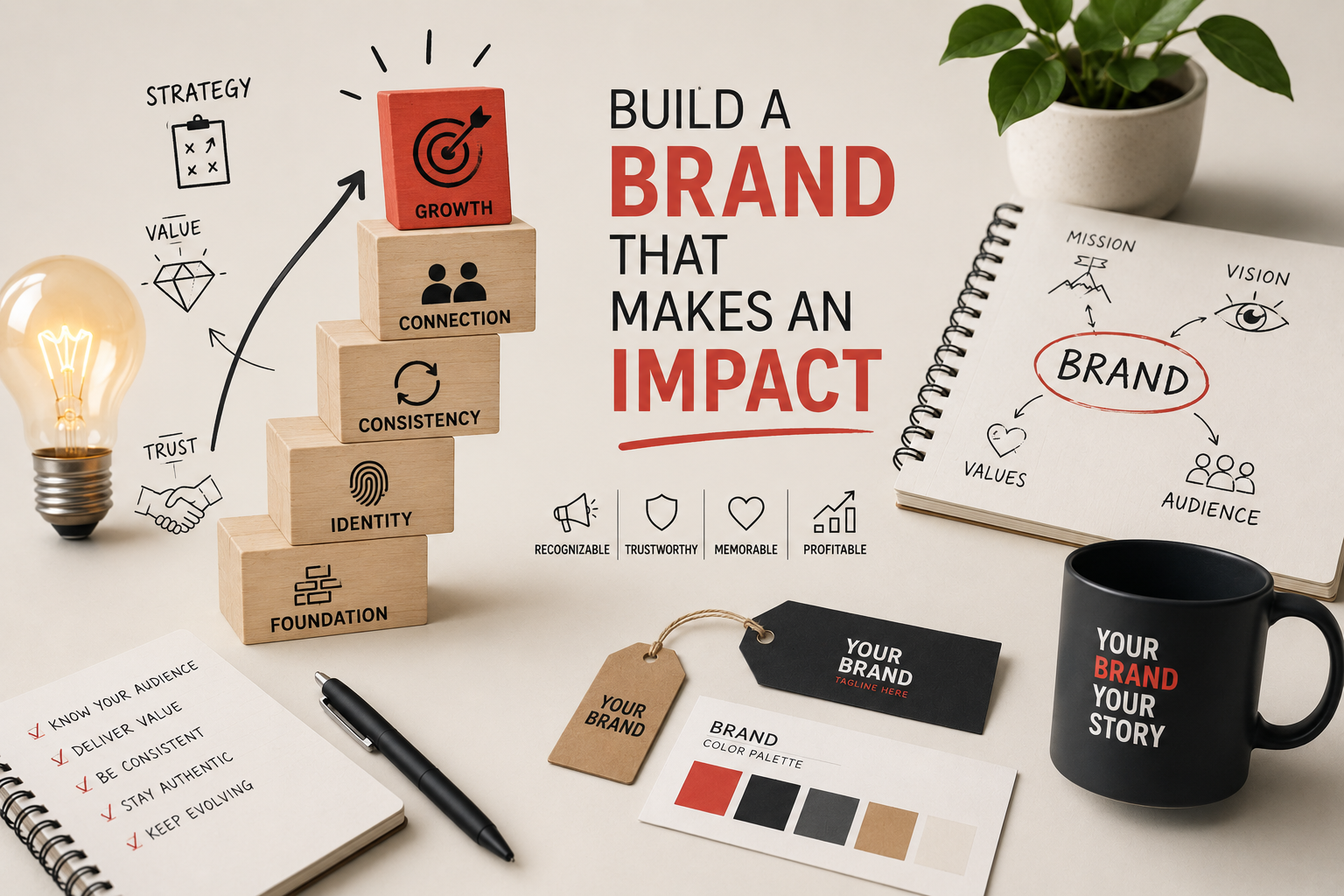
There is a pervasive and highly damaging myth in the entrepreneurial world that branding is an exclusive playground reserved solely for multi-million dollar global giant corporations with bottomless marketing budgets. In reality, for small businesses, local startups, and independent creators, becoming a distinctly recognizable brand is not just an option—it is the absolute critical prerequisite for survival and the only viable strategy for competing against industry Goliaths. While you may not possess the capital to blanket television networks with commercials or buy stadium naming rights, small businesses possess an inherent agility, authenticity, and ability to connect personally that massive corporations desperately covet but cannot replicate. By utilizing highly targeted strategies, raw, authentic communication, and an incredibly nimble brand identity, you can become an absolute titan within your specific niche. This comprehensive guide outlines the exact, budget-efficient tactics that small businesses must deploy to punch far above their weight class and build a legendary local or niche brand.
1. EXPLOIT THE POWER OF HYPER-NICHE TARGETING
The greatest structural advantage a small business possesses is its ability to deeply serve highly specific, specialized markets that large, lumbering companies consider too small to care about. Massive corporations must create generic products that appeal to the widest possible denominator to sustain their massive overhead. As a small business, you must do the exact opposite. Identify a hyper-niche target audience with very specific, underserved needs. Instead of trying to be a generic 'fitness apparel brand' competing with Nike, position yourself as 'premium, sustainable yoga wear exclusively for postpartum mothers'. When you aggressively narrow your focus, your marketing message becomes laser-sharp, highly relevant, and deeply resonant to that specific group. It is vastly easier, cheaper, and faster to become the undisputed industry leader and command premium pricing in a deeply defined micro-niche than it is to capture even a fraction of a percent of a massive, generalized market.
2. WEAPONIZE YOUR AUTHENTIC FOUNDER'S STORY
Large corporations inevitably appear cold, faceless, bureaucratic, and sterile. Small businesses, however, radiate warmth, passion, and have real, relatable human beings behind the counter or the screen. You must weaponize this advantage by telling your authentic founder's story loudly and proudly. Why exactly did you start this business? What intense personal struggle, frustration, or passion drove you to create this product? What late-night sacrifices were made in the background? Consumers today are deeply cynical of corporate marketing, but they fundamentally love supporting other hard-working humans. By transparently sharing your origin story, showcasing your dedicated team, and revealing the unpolished, behind-the-scenes reality of your production processes on platforms like Instagram or TikTok, you bypass traditional marketing defenses. You forge a deep, unbreakable emotional bond with your customers, turning them from casual buyers into fiercely loyal, lifelong brand advocates.
3. DELIVER AN UNREPLICABLE, BOUTIQUE CUSTOMER EXPERIENCE
As a small business operating with limited capital, your most powerful, cost-effective marketing engine is 'Word of Mouth' (WOM) marketing. If you lack a massive advertising budget, your unparalleled product quality and your obsessive customer service must act as your primary marketing channels. Large companies rely on automated phone trees and outsourced support centers. You can counter this by delivering a highly personalized, boutique customer experience that giants cannot physically scale. Addressing customers by their first names, offering highly personalized product recommendations, providing lightning-fast, empathetic after-sales support, and including unexpected 'surprise and delight' moments—such as a handwritten, personalized thank-you note inside every shipping box—are profound psychological touches. A customer who experiences this level of care feels deeply valued. They will inevitably share this exceptional experience with their personal networks and social media followers, generating highly qualified, organic leads that no amount of paid advertising could ever buy.
4. BUILD A LEAN, PROFESSIONAL VISUAL IDENTITY
While you may be a small, local operation, your visual presentation on the internet must look every bit as professional, sleek, and trustworthy as a Fortune 500 company. In the digital age, a consumer's first impression of your business is almost always visual. You do not need to spend tens of thousands of dollars on a Madison Avenue agency, but you absolutely must invest in a clean, modern, professionally designed logo, a cohesive color palette, and high-quality photography. Do not rely on cheap clipart, generic templates, or poorly lit smartphone photos of your products. Utilize highly capable freelance designers or premium automated design platforms to establish a robust visual foundation. Once established, you must adhere to these visual guidelines with militant consistency across your website, social media profiles, business cards, and physical storefront. A polished, cohesive visual identity instantly elevates your perceived value, justifies premium pricing, and instills immediate trust in hesitant first-time buyers.
5. DOMINATE LOCAL SEO AND COMMUNITY INTEGRATION
For small businesses with a physical footprint or a regional service area, dominating local search engine optimization (SEO) and deeply integrating into the physical community is paramount. Your digital brand must be impeccably optimized for local discovery. Claim and meticulously optimize your Google Business Profile, ensuring your hours, address, high-quality photos, and consistent branding are perfectly accurate. Actively solicit and manage online reviews from your satisfied customers, as these reviews act as powerful social proof that heavily influences local search algorithms and consumer trust. Beyond the digital realm, integrate your brand deeply into the fabric of your local community. Sponsor a local youth sports team, partner with adjacent non-competing local businesses for cross-promotional events, or host educational workshops in your local area. By becoming a highly visible, contributing, and respected pillar of your local community, you build a resilient, grassroots brand presence that large national chains cannot easily disrupt.
6. LEVERAGE AGILE CONTENT MARKETING TO PROVE EXPERTISE
Small businesses cannot outspend large corporations on paid advertising, but they can easily out-teach and out-maneuver them through highly agile, expert-driven content marketing. You possess deep, specialized knowledge about your niche that your target audience desperately wants to understand. Share this knowledge freely. Create high-value, educational blog posts, record detailed tutorial videos, or host informative webinars that directly solve your customers' most pressing pain points. If you run a small landscaping business, do not just post ads for your services; create definitive guides on 'How to naturally revive a dying lawn in the Pacific Northwest'. By consistently producing highly educational, non-promotional content, you position your brand as the undisputed, authoritative expert in your field. When consumers repeatedly rely on your free content to solve their minor problems, they will inevitably turn to your business and happily pay your premium rates when they encounter a major problem that requires professional intervention.
7. MAXIMIZING IMPACT THROUGH STRATEGIC PARTNERSHIPS
One of the most effective, low-cost strategies for small business brand expansion is the execution of highly strategic local or niche partnerships. Identify non-competing businesses that share the exact same target demographic as you. If you own an artisanal bakery, partner with a premium local coffee roaster. If you run a boutique fitness studio, partner with a local organic health food store. By cross-promoting each other's services, co-hosting community events, or bundling products together, you instantly gain access to an entirely new pool of highly qualified consumers who already possess a baseline level of trust due to the endorsement of their existing preferred brand. This symbiosis effectively doubles your marketing reach with zero additional advertising spend.
8. THE IMPORTANCE OF FOUNDER-LED MARKETING
In a digital landscape flooded with generic corporate advertisements, the most valuable asset a small business possesses is the founder themselves. Consumers crave authenticity and leadership. Founder-led marketing involves the CEO or owner stepping directly into the spotlight. By actively writing thoughtful thought-leadership articles on LinkedIn, recording behind-the-scenes vlogs on YouTube, or personally answering customer questions on Twitter, the founder humanizes the enterprise. This strategy builds a powerful personal brand that acts as an impenetrable shield for the business. When people trust and admire the founder, they naturally extend that deep loyalty to the products and services the founder's company provides.
9. HARNESSING USER-GENERATED CONTENT (UGC)
Small businesses simply cannot match the content production volume of massive agencies. The solution is to let your most passionate customers create the content for you. User-Generated Content (UGC) is the holy grail of modern branding. Encourage your customers to take photos of your product in their homes, to record unboxing videos, and to share their genuine testimonials online. Incentivize this behavior by offering discounts for tags, running monthly photo contests, or simply prominently featuring their content on your official social media channels. UGC is infinitely more persuasive to potential buyers than any polished studio advertisement because it provides raw, unfiltered social proof that real people love your product.
10. MASTERING THE PIVOT: AGILE BRAND EVOLUTION
The final superpower of a small business is radical agility. Massive corporations require months of board meetings, agency reviews, and bureaucratic approvals to change even a minor aspect of their branding or product line. A small business can pivot in an afternoon. If you notice a sudden shift in consumer behavior, a new emerging platform like TikTok, or a glaring new pain point in your community, you can adapt your marketing message, launch a new sub-product, or alter your service delivery method instantly. A successful small business brand is never rigid; it is a fluid, hyper-responsive entity that constantly listens to the ground truth of its customer base and evolves at lightning speed to outmaneuver slow-moving competitors.