
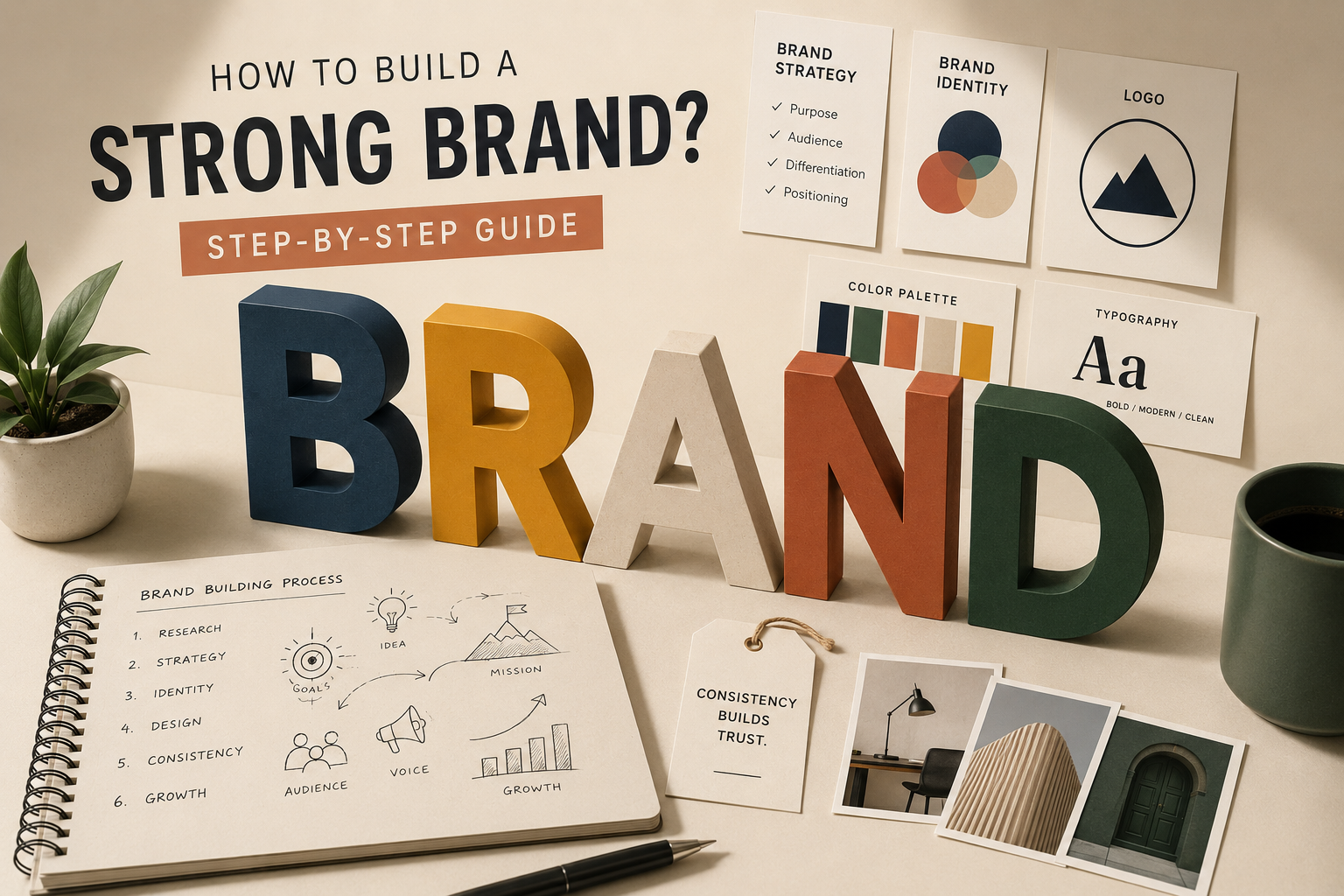
Building a strong, compelling brand from scratch that creates fiercely loyal customers requires much more than just designing a beautiful logo, launching a trendy website, or running flashy advertising campaigns. A strong brand is a complex, living ecosystem born from a combination of strategic thinking, relentless consistency, profound customer empathy, and the agile ability to adapt to ever-shifting market dynamics. It is the process of transforming a generic business entity that sells commodities into a powerful, recognizable cultural force that commands premium pricing, dictates industry trends, and fosters a cult-like following. In an era where consumers are bombarded with thousands of marketing messages daily, building a strong brand is the only sustainable moat against aggressive competitors and the rapid commoditization of products. Here are the deeply researched, essential, and sequential steps to transform your business from just being another 'company' into an unforgettable, indestructible 'brand'.
1. CONDUCT RUTHLESS TARGET AUDIENCE AND COMPETITOR ANALYSIS
The absolute first and most unforgiving rule of brand building is knowing exactly, down to a microscopic level, who you are targeting. The thought of 'I want to sell my product to everyone' is a massive, fatal mistake for brands in their infancy. When you attempt to speak to everyone, you resonate with no one. You must meticulously craft highly detailed 'buyer personas'. Detail your ideal customer's exact age, geographic location, income bracket, deepest psychological fears, core aspirational goals, and the specific daily pain points your product resolves. Simultaneously, you must conduct a ruthless analysis of your competitors. Do not just look at their pricing; dissect their entire brand strategy. What are their inherent strengths? What are their glaring weaknesses or blind spots? What specific customer complaints do they repeatedly ignore? By overlaying your deep understanding of the customer with the gaps left by your competitors, you will uncover the exact strategic 'white space' in the market where your new brand can plant its flag and dominate.
2. FORGE YOUR BRAND'S PURPOSE, VISION, AND CORE VALUES
Modern consumers, particularly Millennials and Gen Z, no longer just buy a product; they buy a 'reason'. They seek alignment with brands that reflect their own personal ethics and worldviews. Therefore, you must clearly articulate your brand's core purpose. Why does your company exist other than to simply generate revenue? What fundamental change do you want to enact in the world or in your specific customer's daily life? Following this, establish your Vision Statement—a grand, aspirational view of what the future looks like once your brand succeeds. Crucially, define your Core Values. These are the uncompromising moral and ethical pillars of your company (e.g., radical transparency, obsessive customer service, absolute environmental sustainability). These values must be authentic, not just marketing fluff. They will act as the ultimate internal compass, guiding every decision from product manufacturing to hiring practices. Brands that take a definitive stand for the values they believe in, even at the risk of alienating some demographics, forge unbreakable bonds with their core audience.
3. ENGINEER A COMPELLING UNIQUE SELLING PROPOSITION (USP)
In a sea of overwhelming sameness, you must definitively answer the most critical question in the consumer's mind: 'Why should I choose you over everyone else?' The answer is your Unique Selling Proposition (USP). Your USP is the singular, highly specific benefit or feature that sets you completely apart from every other competitor in the market. It cannot be generic claims like 'high quality' or 'great customer service', as everyone claims those. It must be specific, tangible, and highly desirable. Are you the absolute fastest delivery service in your sector? Are you the only software platform built exclusively for a highly niche industry? Do you offer an unprecedented lifetime warranty? Once you engineer this hyper-specific USP, it must be refined into a crystal-clear, punchy, and irresistible statement. This statement becomes the tip of your marketing spear, the central narrative around which all your advertising campaigns, website copy, and sales pitches revolve.
4. ARCHITECT A COHESIVE AND STRIKING VISUAL IDENTITY
Only after the strategic foundation (Audience, Values, USP) is firmly established should you move into the visual design phase. Your visual identity is the aesthetic translation of your brand's soul. It begins with a distinctive, memorable, and scalable logo that captures the essence of your business. Next, develop a scientifically backed color palette based on color psychology to evoke the precise emotional response you desire from your customers (e.g., blue for trust, orange for energetic action). Select typography that aligns perfectly with your brand's personality—whether that is a sleek, modern sans-serif for a tech startup or a robust, classic serif for a wealth management firm. Establish strict guidelines for photography, illustration styles, and iconography. Most importantly, codify all of these elements into a comprehensive Brand Guidelines document. This ensures that every visual asset created, whether an Instagram story, a massive billboard, or product packaging, looks like it came from the exact same corporate DNA, projecting absolute professionalism and visual harmony.
5. DEVELOP AN AUTHENTIC AND RECOGNIZABLE BRAND VOICE
If your visual identity is how your brand looks, your brand voice is how it sounds. A strong brand does not communicate in generic, sterile corporate jargon; it speaks with a distinct, human-like personality. You must define this personality clearly. Is your brand an authoritative, wise mentor (like Harvard Business Review)? Is it a rebellious, high-energy challenger (like Red Bull)? Is it an empathetic, supportive friend (like Dove)? Once defined, this specific voice must echo relentlessly across every single piece of written communication. It must dictate the style of your website copy, the humor or seriousness of your social media posts, the phrasing of your automated transactional emails, and the scripts your customer service team uses. A consistent, authentic brand voice humanizes your corporation, making it infinitely easier for consumers to relate to, trust, and ultimately converse with your brand on an emotional level.
6. EXECUTE WITH UNYIELDING CONSISTENCY ACROSS ALL TOUCHPOINTS
The final, and arguably most difficult, step in building a strong brand is executing your strategy with unyielding, obsessive consistency. A brand is not built overnight by a single viral campaign; it is built through thousands of tiny, perfectly aligned interactions over years. Consistency is the engine of trust. From the moment a customer clicks your visually aligned ad, reads your perfectly toned landing page, experiences your seamless checkout process, receives your beautifully packaged physical product, to the moment they interact with your empathetic customer support, every single touchpoint must reaffirm the promises your brand identity makes. If your marketing promises 'premium luxury' but your customer service is cheap and unresponsive, the brand illusion shatters instantly. Maintaining this extreme consistency requires rigorous internal training, strict adherence to brand guidelines, and a relentless commitment to operational excellence. When consistency is maintained over time, cognitive friction is removed, and your brand becomes a trusted, automatic choice in the consumer's mind.
7. BUILDING A COMMUNITY AROUND YOUR BRAND
The ultimate zenith of brand building is the transition from having a 'customer base' to cultivating an impassioned 'community'. A strong brand doesn't just broadcast messages to a passive audience; it facilitates peer-to-peer connection among its users. Look at brands like Harley-Davidson, Peloton, or Gymshark. These companies do not merely sell motorcycles, stationary bikes, or gym apparel; they sell belonging. They sponsor massive offline events, host highly active online forums, and encourage their users to interact, share their progress, and support one another. By creating a tribal environment where consumers feel a shared identity with other consumers, the brand becomes deeply intertwined with the individual's lifestyle. When a brand achieves this level of community integration, traditional advertising becomes almost obsolete, as the community members themselves become the most aggressive, authentic, and persuasive marketing channel imaginable.