
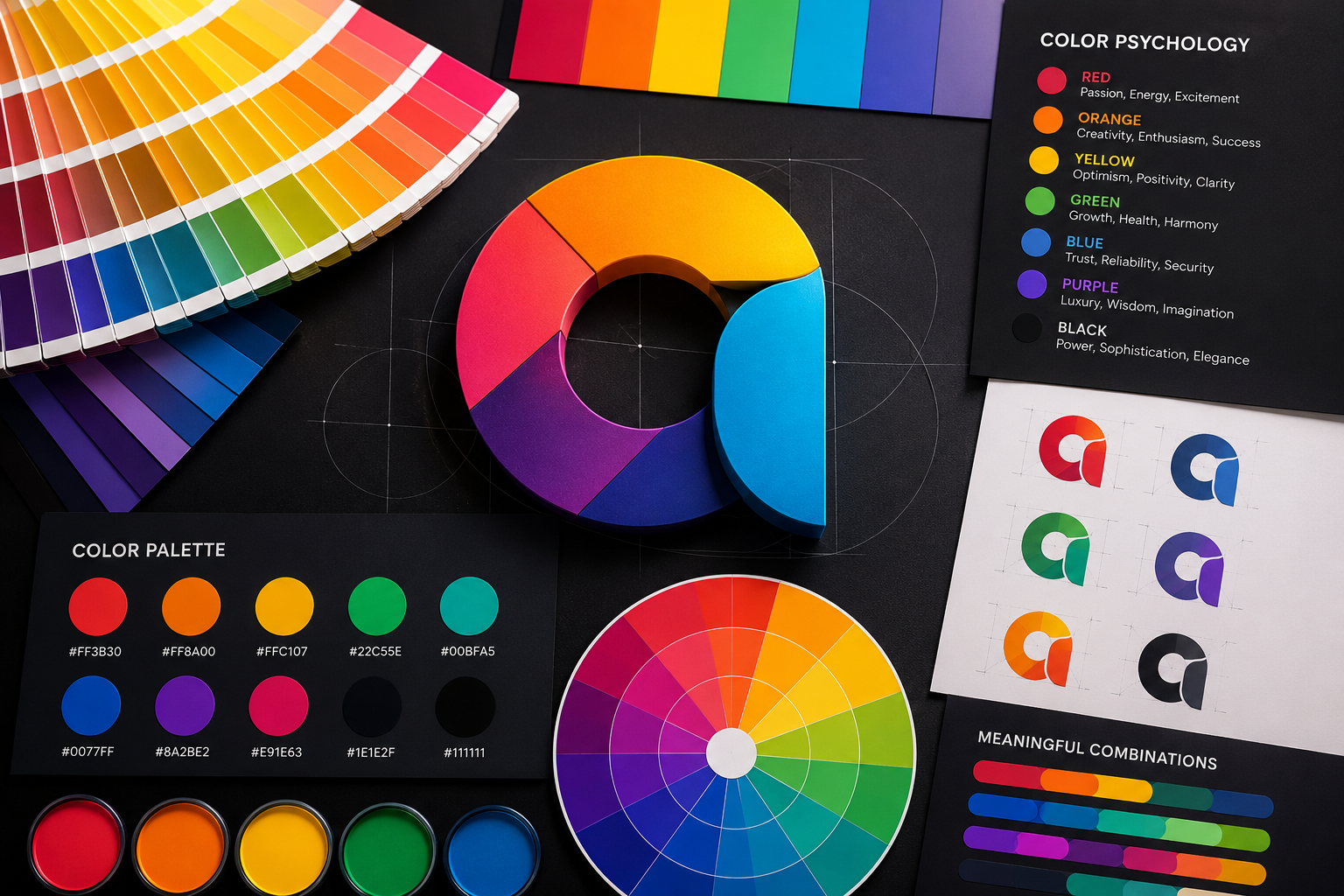
When an individual encounters your brand for the very first time, they process visual information at a blistering subconscious speed before reading a single word of text. In this lightning-fast cognitive process, color is the absolute dominant force. According to numerous neurological studies and marketing analytics, color increases brand recognition by an astounding 80%. This makes the decision of how to choose logo colors one of the most critical, high-stakes strategic choices a business owner or designer will ever make. Your logo's color palette is not a matter of subjective artistic preference; it is a highly calculated weapon of consumer psychology.
Choosing the wrong color for your corporate logo can silently sabotage your business. If a financial institution accidentally selects a chaotic, neon color palette, they will subconsciously project instability and risk, completely alienating potential investors. Conversely, choosing the perfect, strategically aligned colors can instantly foster deep emotional connections, communicate unshakeable trustworthiness, and dramatically increase conversion rates. In this ultimate, SEO-driven guide, we will explore the depths of brand color psychology and provide you with a foolproof framework for selecting the perfect logo colors.
1. THE PSYCHOLOGY OF COLOR IN BRANDING
Color psychology is the scientific study of how different hues influence human behavior, emotions, and decision-making processes. Every single color spectrum emits a specific energetic frequency that triggers distinct neurological associations. When you apply color psychology to logo design, you are essentially programming a specific emotional response into your target audience. Red, for example, is the color of extreme passion, danger, urgency, and physical energy. It actually raises the human heart rate. This is precisely why fast-food giants and clearance sales rely heavily on red—it commands immediate attention and stimulates appetite and impulsive action.
On the opposite end of the spectrum, Blue is universally recognized as the color of intellect, peace, security, and absolute reliability. It is no coincidence that the vast majority of global tech giants, multinational banks, and healthcare providers utilize blue in their branding. Blue mathematically lowers the heart rate, cultivating a profound sense of institutional safety and corporate trust. Understanding these deep-rooted psychological triggers is the mandatory first step before opening your AI logo maker or consulting a design agency.
2. UNDERSTANDING THE COLOR WHEEL AND HARMONY
To construct a professional and aesthetically pleasing logo, you must master the fundamental mechanics of the color wheel. Developed originally by Sir Isaac Newton, the color wheel is a visual representation of color theory that maps out the relationships between primary, secondary, and tertiary colors. A successful logo palette relies on established mathematical color harmonies. The most powerful harmonies include Complementary, Analogous, and Triadic color schemes.
Complementary colors are positioned directly opposite each other on the color wheel, such as Blue and Orange, or Red and Green. This pairing creates maximum visual contrast and high kinetic energy, perfect for sports brands or dynamic startups. Analogous colors sit side-by-side on the wheel (like Blue, Teal, and Green). They create a highly unified, soothing, and harmonious visual experience, often used by eco-brands and wellness centers. Triadic colors involve three colors evenly spaced around the wheel, offering a vibrant, balanced, and highly stimulating palette ideal for children's brands or creative agencies.
3. WARM VS. COOL COLORS IN LOGO DESIGN
The entire color wheel is bisected into two distinct thermal categories: Warm colors and Cool colors. This thermal division plays a massive role in dictating your brand's corporate personality. Warm colors include Reds, Oranges, and Yellows. These colors are intrinsically associated with fire, the sun, heat, and raw energy. Logos that utilize warm color palettes project enthusiasm, optimism, aggression, and extreme approachability. They are perfect for entertainment companies, food services, and lifestyle brands that want to evoke excitement.
Cool colors, comprising Blues, Greens, and Purples, are associated with water, nature, night, and the sky. These colors inherently project calmness, professionalism, logic, and prestige. A cool color palette is the absolute standard for B2B enterprises, legal firms, financial institutions, and software companies. If your primary corporate objective is to convince high-net-worth clients that their assets are secure, you must build your logo architecture using cool, stable colors.
4. THE MEANING BEHIND POPULAR LOGO COLORS
To further refine your choice, let us analyze the specific psychological associations of individual colors. Yellow is the color of the sun; it represents unbridled optimism, creativity, youth, and affordability. However, it is highly reflective and can tire the eyes if used excessively. Green is the universal symbol for organic nature, health, growth, and wealth. It is exclusively dominant in eco-friendly products, vegan food brands, and financial investment firms. Orange blends the aggressive energy of red with the joy of yellow, creating a highly sociable, adventurous, and enthusiastic vibe favored by youth brands.
Black, while technically the absence of color, is one of the most powerful tools in branding. Black represents absolute luxury, timeless elegance, mystery, and unyielding authority. Premium fashion houses, elite car manufacturers, and ultra-high-end technology brands utilize stark black logos to signal exclusivity. White, used heavily as negative space, projects clinical cleanliness, purity, and modern minimalism. Purple, historically the color of royalty due to the extreme rarity of purple dye in the ancient world, represents luxury, spirituality, magic, and supreme quality.
5. HOW MANY COLORS SHOULD YOUR LOGO HAVE?
A rampant mistake made by amateur designers is cramming five or six different colors into a single logo in a desperate attempt to stand out. In reality, this creates visual vomit. The golden rule of professional logo design is strict color limitation. The vast majority of the world's most successful, billion-dollar corporate logos utilize only one or two primary colors. Limiting your palette guarantees that your logo remains memorable, easily recognizable, and cost-effective to print across physical mediums.
If you absolutely must use multiple colors to represent diversity or a wide range of services (like the Google or Microsoft logos), you must execute it with perfect geometric balance. Otherwise, stick to one dominant brand color that carries your core psychological message, and perhaps one secondary accent color to highlight specific call-to-action elements or typography. The simpler your color palette, the stronger your brand identity will anchor itself in the consumer's mind.
6. CULTURAL DIFFERENCES IN COLOR PERCEPTION
If you are designing a logo for a brand that will operate on an international or global scale, you must possess a deep understanding of cultural color psychology. Color meanings are not universal; they shift drastically depending on geography and cultural history. For instance, in Western cultures, White is the color of purity, weddings, and peace. However, in many Eastern and Asian cultures, White is the traditional color of mourning and death.
Similarly, Red represents danger or financial deficit in Western business ('being in the red'), but in China, Red is the ultimate symbol of extreme good fortune, prosperity, and joy. Before finalizing your global brand identity, you must cross-reference your chosen color palette against the cultural norms of your target markets. Failing to account for cultural color differences can lead to disastrous international product launches and severely alienated foreign demographics.
7. TESTING YOUR COLOR PALETTE ACROSS MEDIUMS
The final step in choosing your logo colors is rigorous, multi-platform technical testing. A color that looks incredibly vibrant on your high-definition, backlit Retina computer monitor might look dull, muddy, or completely different when printed on a matte cardboard box using CMYK ink. Your brand guidelines must include exact technical specifications for your colors: HEX codes for web design, RGB codes for digital screens, CMYK percentages for standard printing, and exact Pantone (PMS) matches for premium physical manufacturing.
Additionally, you must test how your colored logo performs against both stark white backgrounds and absolute black dark-mode interfaces. Does the contrast hold up? Does it remain legible? A truly robust color palette is versatile enough to maintain its psychological impact and visual integrity across the entire spectrum of physical and digital environments, ensuring your brand always looks flawless.