
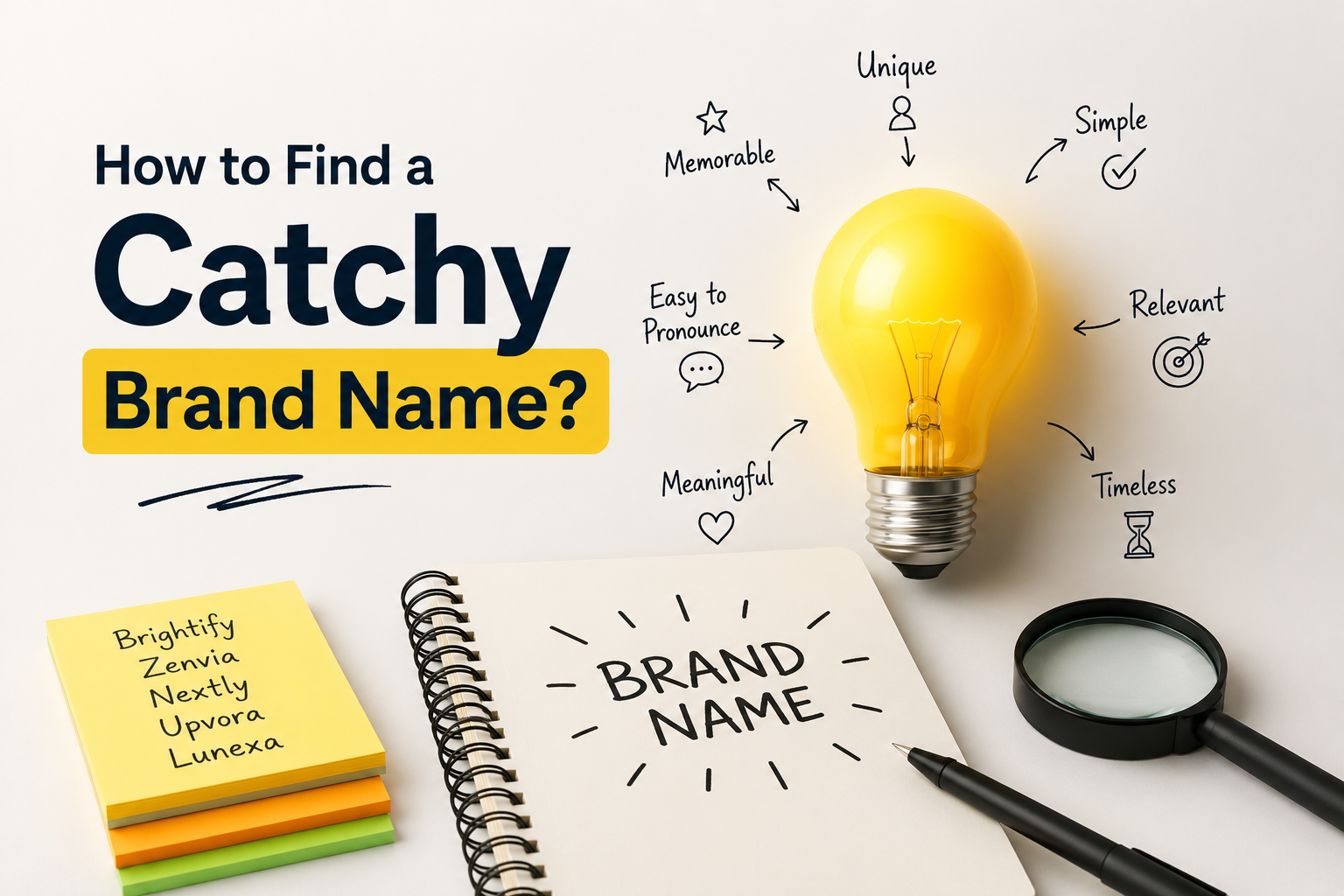
One of the most intimidating, critical, and permanent decisions you will make during the inception of a business is selecting the definitive name for your brand. A brand name is the absolute cornerstone of your company's identity; it is the very first point of contact you establish with your target audience, investors, and the broader market. Choosing the wrong name can lead to devastating consequences, including consumer confusion, inability to secure organic search rankings, disastrous legal trademark battles, and the immense financial burden of an inevitable rebranding campaign. Conversely, the right name acts as an incredibly powerful catalyst. It instantly communicates your core value proposition, lodges itself effortlessly into the consumer's memory, multiplies the effectiveness of your advertising budget, and facilitates explosive word-of-mouth growth. In a digital ecosystem flooded with millions of competing entities, a brilliantly crafted name is your most potent weapon to slice through the noise and establish immediate authority.
1. THE ANATOMY AND CHARACTERISTICS OF A POWERFUL BRAND NAME
Before diving into the creative process, one must deeply understand the architectural blueprint of a successful brand name. The most effective names across global industries share several non-negotiable characteristics. First and foremost is Brevity and Simplicity. The human brain prioritizes information that is easy to process. Names like Apple, Uber, and Sony are short, punchy, and require minimal cognitive load to read or speak. Secondly, a great name must be highly Memorable and Phonetically Pleasing. It should roll off the tongue effortlessly and possess a rhythmic or alliterative quality that makes it stick in the mind (e.g., Coca-Cola, PayPal). Thirdly, it must be completely unambiguous in its Spelling. If you have to constantly spell your brand name over the phone or explain its pronunciation, you are actively losing potential customers and web traffic. Furthermore, a powerful name must be highly Scalable. If you name your company 'Boston Leather Belts', you are permanently restricting your business to a specific geographic region and a singular product line. A visionary brand name provides enough semantic flexibility to allow the company to pivot into entirely new product categories and global markets without losing its relevance.
2. THE FOUR CATEGORIES OF BRAND NAMES
Brand names generally fall into four distinct strategic categories, each with its own unique advantages and marketing requirements. The first category is Descriptive Names (e.g., General Motors, The Weather Channel). These names immediately inform the consumer exactly what the business does. They are excellent for SEO and require less initial marketing explanation, but they are incredibly difficult to trademark and often lack emotional resonance. The second category is Evocative Names (e.g., Amazon, Nike, Apple). These names use powerful metaphors to suggest the brand's positioning without directly describing the product. They require a substantial initial marketing investment to build the association, but they offer massive potential for building a legendary, emotive brand. The third category is Invented or Abstract Names (e.g., Google, Kodak, Xerox). These are completely fabricated words. They are incredibly easy to trademark and secure domain names for, and they act as a blank canvas upon which you can paint any brand identity you desire. However, they require the largest advertising budget to inject meaning into the public consciousness. The final category is Lexical Names, which rely on wordplay, puns, or intentional misspellings (e.g., Dunkin', Reddit, Lyft). Understanding these categories allows you to strategically choose the approach that best aligns with your available capital and long-term vision.
3. THE DEEP BRAINSTORMING AND CONCEPTUALIZATION PROCESS
Generating a world-class name is rarely a 'eureka' moment; it is the result of a grueling, highly structured brainstorming process. Begin by completely stripping away any preconceived notions and focusing on the core essence of your business. Create a massive list of 'seed words' that encapsulate your brand's mission, the pain points you solve, the feelings you want to evoke, and your unique differentiating factors. Do not filter yourself at this stage. Once you have a master list, employ advanced linguistic techniques. Explore Latin or Greek root words related to your industry. Investigate translations of your seed words into obscure foreign languages. Experiment with portmanteaus (blending two words together, like 'Pinterest' from Pin and Interest). Play with prefixes, suffixes, and intentional phonetic replacements. Utilize digital tools, thesauruses, and industry glossaries to expand your vocabulary horizontally. The objective of this phase is not to find the perfect name, but to generate a colossal volume of raw material—often exceeding hundreds of variations—that can later be refined, categorized, and evaluated against your strategic criteria.
4. THE CRITICAL FILTERING AND EVALUATION MATRIX
Once you have generated an extensive list of potential names, you must pass them through a ruthless evaluation matrix to eliminate the weak contenders. The first filter is the 'Linguistic Audit'. Does the name sound pleasant when spoken aloud? Is it free of unintended negative connotations or offensive meanings in other major languages? A classic example of failure here is the Chevy Nova, where 'No va' translates to 'It doesn't go' in Spanish. The second filter is the 'Visual Audit'. Write the name out in various fonts and capitalizations. Does the letter structure look aesthetically pleasing? Does it lend itself well to logo design? The third filter is the 'Contextual Audit'. Imagine the name spoken in a radio advertisement, printed on a billboard, or mentioned casually in a conversation. Does it command authority? Does it sound like a legitimate, trustworthy entity within your specific industry? By aggressively applying these filters, you should reduce your massive brainstorming list down to a highly concentrated shortlist of 5 to 10 exceptional, viable candidates that align perfectly with your brand strategy.
5. NAVIGATING THE LEGAL TRADEMARK AND DOMAIN MINEFIELD
The most creative, brilliant name in the world is utterly worthless if you cannot legally own and protect it. This is the stage where most naming projects violently derail. For your top candidates, you must conduct exhaustive preliminary trademark searches. Do not rely solely on basic Google searches; utilize official government trademark databases (such as the USPTO in the United States or the EUIPO in Europe). You are not just looking for exact matches, but for 'confusingly similar' marks in your specific class of goods or services. Proceeding with a name that infringes on an existing trademark is corporate suicide, inviting devastating cease-and-desist orders and massive financial liabilities. Simultaneously, you must navigate the brutal reality of domain name availability. Securing a clean, unmodified '.com' domain is increasingly rare and expensive. If the exact '.com' is taken by a squatter, you must evaluate alternative premium top-level domains (TLDs) like '.io', '.co', or '.ai', or consider adding strategic modifier words (e.g., 'Get[Name].com' or '[Name]App.com'). Only names that survive rigorous legal scrutiny and possess viable digital real estate should be allowed to proceed to the final selection phase.
6. EMPIRICAL TESTING AND FINAL DECISION MAKING
The final stage of the naming process requires removing your personal ego and subjecting your final candidates to objective, empirical testing. Never rely solely on the opinions of your friends or family, as they are inherently biased and likely do not represent your target demographic. Instead, deploy blind focus groups or digital surveys to panels of your ideal customers. Present the names without any context or logo designs and ask participants for their immediate, unfiltered associations. What industry do they think this company operates in? What price point do they expect? Does the name sound trustworthy, innovative, or cheap? Additionally, conduct basic memorability tests: expose participants to the names briefly, distract them, and see which ones they can recall accurately 24 hours later. The data gathered from these empirical tests will often reveal hidden psychological triggers or pronunciation issues that you completely missed. Use this objective data to make your final, definitive selection. Once the decision is made, immediately execute the legal trademark filings, purchase the domain networks, secure all relevant social media handles, and begin the exciting process of breathing visual life into your newly christened brand.
7. THE PSYCHOLOGY OF PHONETICS IN NAMING
The science of phonetics plays a massive, subconscious role in how a brand name is perceived. Words containing hard consonants like 'K', 'T', 'X', and 'Z' (e.g., Kodak, Xerox, Netflix) are processed by the brain as sharp, energetic, and highly memorable. They demand attention and convey a sense of modern efficiency and speed. Conversely, names dominated by soft consonants and vowels like 'L', 'M', 'S', and 'W' (e.g., LuluLemon, Sephora, Swirl) evoke feelings of smoothness, comfort, luxury, and tranquility. When brainstorming, you must align the phonetic structure of your chosen name directly with the psychological state you want your product to induce in the consumer.
8. CROWDSOURCING VS. INTERNAL BRAINSTORMING
A major decision many startups face is whether to brainstorm internally or utilize crowdsourcing platforms to generate name ideas. Crowdsourcing can yield hundreds of diverse ideas from people with vastly different cultural backgrounds in a matter of hours, providing a massive volume of raw linguistic data. However, the downside is that these external contributors lack a deep, visceral understanding of your brand's core mission and subtle strategic nuances. Internal brainstorming, while sometimes creating an echo chamber, guarantees that every name generated is deeply rooted in the founders' authentic vision. The optimal approach is often a hybrid: utilize crowdsourcing to generate horizontal, out-of-the-box linguistic combinations, but reserve the final selection and vertical refinement strictly for the internal executive team.
9. REBRANDING: WHEN TO ABANDON A FAILING NAME
Sometimes, a business must confront the harsh reality that their current name is an active liability. Indicators that a rebrand is strictly necessary include: frequent consumer confusion regarding what you actually sell, a name that is so geographically specific it prevents national expansion, or a name that has become irreparably associated with a public relations crisis. Abandoning a failing name requires immense courage and a significant capital investment. However, clinging to a toxic or limiting brand name out of misplaced nostalgia is a guaranteed recipe for long-term stagnation. When executing a rebrand, the transition must be meticulously managed with clear, transparent communication to your existing customer base, explaining the strategic reasons for the evolution while ensuring them that your core product quality remains untouched.