
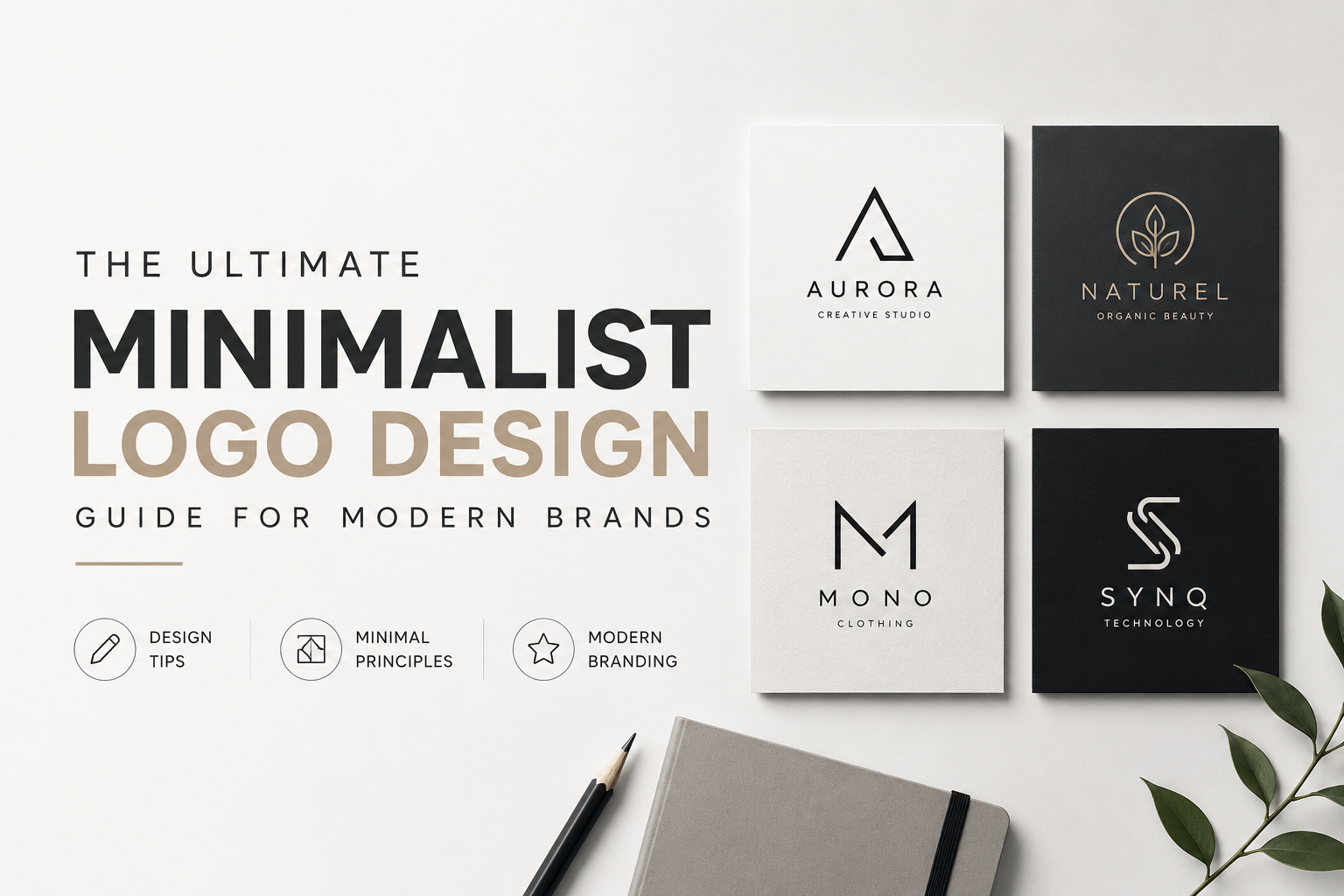
In an era characterized by relentless digital noise and constant visual overstimulation, minimalism has emerged as the supreme aesthetic philosophy in modern corporate branding. The ultimate minimalist logo design guide is not about stripping away creativity; it is about distilling a brand's essence down to its most potent, undeniable core. A minimalist logo commands attention not by shouting louder than its competitors, but by speaking with absolute clarity and precision. This design methodology relies on the fundamental belief that perfection is achieved not when there is nothing left to add, but when there is nothing left to take away.
Transitioning to a minimalist brand identity offers massive strategic advantages for businesses operating in 2026. Minimalist logos boast unparalleled scalability across mobile interfaces, superior recall rates in consumer psychology, and a timeless elegance that immunizes the brand against fleeting design trends. In this highly detailed, SEO-optimized guide, we will explore the exact technical elements, psychological principles, and structural methodologies required to engineer a flawless minimalist logo that drives brand authority and long-term customer loyalty.
1. WHAT IS MINIMALIST LOGO DESIGN?
Minimalist logo design is a visual approach that emphasizes extreme simplicity, clean lines, and uncluttered layouts. It deliberately avoids complex illustrations, excessive color gradients, 3D drop shadows, and intricate details. Instead, it relies on fundamental geometric shapes, highly legible typography, and the strategic use of negative space to convey a brand's message. The goal is to create a visual mark that can be instantly recognized and understood by the human brain in a fraction of a second, without requiring any cognitive heavy lifting.
This aesthetic has become the gold standard for global tech giants, luxury fashion houses, and modern startups alike. When you look at the evolution of brands like Apple, Google, and Mastercard, you see a clear trajectory: they have all systematically stripped away the complex, realistic details of their early logos in favor of flat, hyper-minimalist geometry. This is not a coincidence; it is a calculated response to the demands of the modern digital ecosystem, where brand assets must perform flawlessly on tiny smartphone screens and smartwatches.
2. THE PSYCHOLOGICAL POWER OF LESS IS MORE
The effectiveness of minimalist logos is deeply rooted in cognitive psychology. The human brain is constantly bombarded with thousands of advertising messages every single day. To cope with this sensory overload, the brain aggressively filters out complex, cluttered information. A minimalist logo bypasses these cognitive filters because it is easy to process. This effortless processing translates directly into positive brand perception; consumers subconsciously associate clean, simple design with transparency, efficiency, and premium quality.
Furthermore, minimal design projects a profound sense of corporate confidence. A brand that requires a chaotic, heavily detailed logo often comes across as desperate to explain exactly what it does. Conversely, a brand that relies on a simple, bold minimalist mark communicates that its reputation and product quality speak for themselves. This psychological leverage is precisely why luxury brands exclusively use stark, minimalist typography and monochromatic palettes to establish an aura of exclusive prestige.
3. KEY ELEMENTS OF A MINIMALIST LOGO
Engineering a successful minimalist logo requires absolute mastery over a few core elements. The first is geometric purity. Minimalist logos are frequently constructed using perfect circles, squares, and triangles. These foundational shapes convey stability, balance, and harmony. The second element is strict proportion and alignment. Because there are so few elements in the design, any slight mathematical imbalance or sloppy spacing becomes instantly glaring. Using rigid grid systems and the golden ratio is non-negotiable in minimalist architecture.
The third key element is flat design. Minimalist logos completely reject skeuomorphism (the imitation of real-world textures and lighting). They do not use bevels, embossed textures, or realistic drop shadows. The design must exist perfectly in a two-dimensional, flat space. This flat architecture not only contributes to a modern aesthetic but also ensures that the logo can be rendered effortlessly in CSS, SVG formats, and single-color physical printing processes without any visual degradation.
4. THE ROLE OF NEGATIVE SPACE IN LOGO DESIGN
Negative space (the empty space surrounding and inside the primary shapes) is arguably the most powerful weapon in the minimalist designer's arsenal. In a minimalist logo, the empty space is not just background; it is an active, functional component of the design. Brilliant minimalist logos often use negative space to hide secondary symbols or clever visual puns, rewarding the viewer for paying attention and creating a massive boost in brand memorability.
The iconic FedEx logo is the ultimate masterclass in negative space, forming a perfect forward-pointing arrow between the letters 'E' and 'x'. Another incredible example is the WWF (World Wildlife Fund) panda, which uses the white negative space of the background to complete the shape of the animal. Mastering negative space allows you to inject profound meaning and dual imagery into a logo while strictly maintaining an ultra-clean, minimalist exterior profile.
5. CHOOSING THE RIGHT MINIMALIST TYPOGRAPHY
In minimalist branding, typography often takes center stage, and in many cases (like logotypes or wordmarks), the typography is the entire logo. Selecting the right font is a mission-critical decision. Minimalist design heavily favors clean, modern Sans-Serif fonts (like Helvetica, Futura, or custom geometric typefaces) due to their crisp, unadorned lines and excellent digital legibility. These fonts project a forward-thinking, objective, and highly professional corporate tone.
However, minimalist Serif fonts can also be utilized to project a sense of modern luxury and established heritage, provided the serifs are sharp, refined, and not overly decorative. Regardless of the font family, minimalist typography demands meticulous attention to kerning (letter spacing). Generous, balanced spacing between letters allows the typography to breathe, enhancing the overall feeling of premium minimalism and ensuring the brand name is perfectly legible at microscopic mobile dimensions.
6. MONOCHROMATIC VS. LIMITED COLOR PALETTES
Color restraint is a defining pillar of minimalist logo design. A true minimalist logo never relies on a chaotic rainbow of colors. The most potent minimalist brands often employ a strict monochromatic palette—using only black, white, or varying shades of a single color. Monochromatic logos offer the ultimate versatility, ensuring that the brand identity remains consistent whether viewed on a high-definition OLED screen or printed on a basic shipping box.
If color is necessary to convey the brand's psychological message, a limited palette of no more than two highly contrasting colors should be used. The selected colors must be bold, deliberate, and highly strategic. A pop of electric blue or vibrant safety orange against a stark black-and-white framework can create a massive visual impact without compromising the minimalist integrity of the design. The rule is simple: if a color does not serve a specific psychological purpose, eliminate it.
7. HOW TO TRANSITION FROM COMPLEX TO MINIMALIST
For existing businesses looking to rebrand, transitioning from a legacy, complex logo to a modern minimalist identity requires a strategic, phased approach. The goal is to simplify the visual mark without destroying the established brand equity and recognition you have built with your loyal customer base. Start by identifying the absolute core visual element of your existing logo. What is the one shape or letter that your customers associate most strongly with your brand?
Once identified, isolate that element and systematically strip away all borders, gradients, secondary texts, and unnecessary colors. Refine the remaining shape using perfect geometry and clean vector lines. Update the typography to a modern, legible sans-serif. This process, often referred to as 'de-branding', results in a refreshed, hyper-modern logo that retains the historical DNA of your company while perfectly aligning your visual identity with the minimalist demands of the 2026 digital marketplace.