
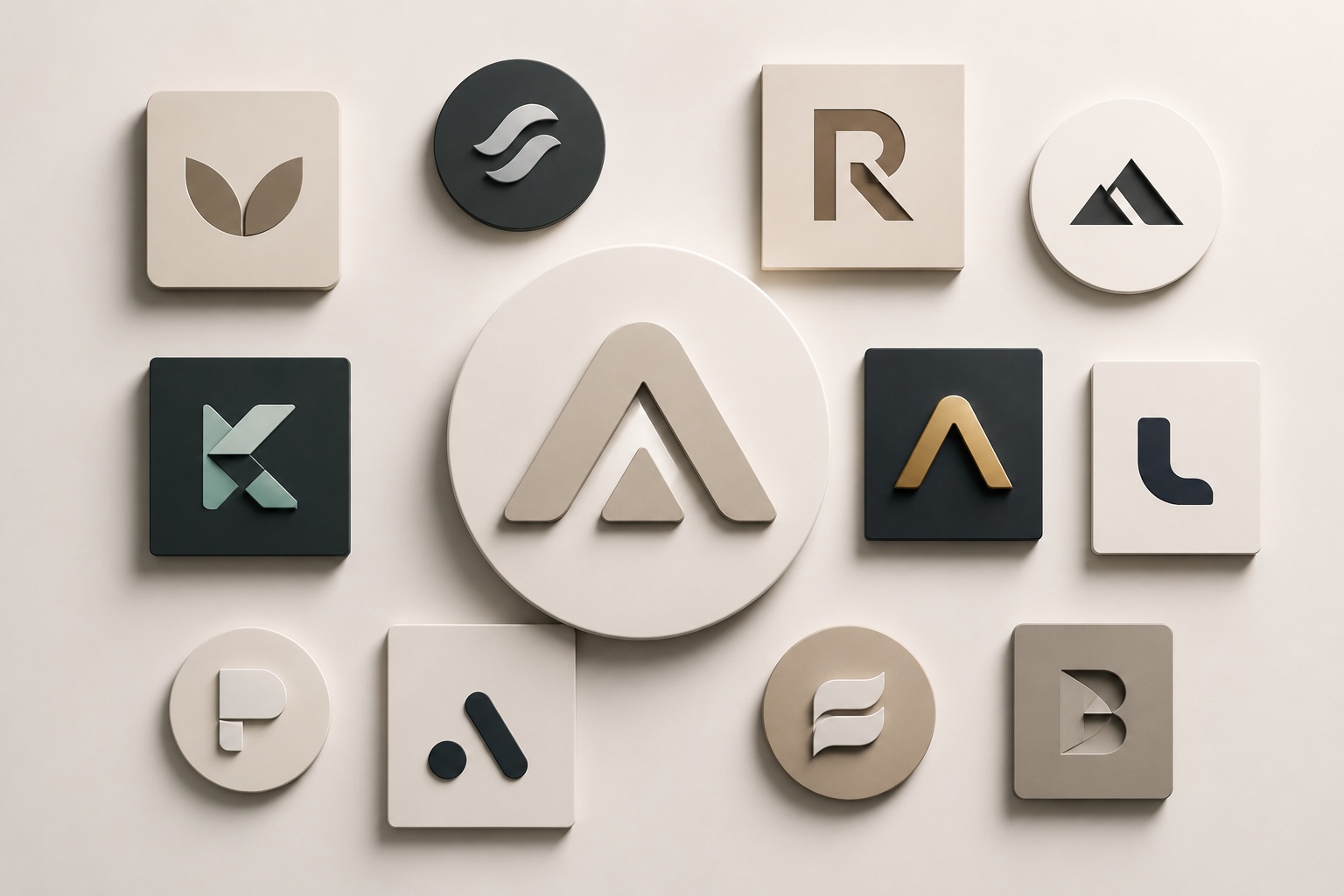
The global branding landscape is undergoing a massive, unprecedented visual tectonic shift. As we navigate deep into 2026, the traditional, static rules of corporate identity have been entirely rewritten by rapid advancements in artificial intelligence, shifting consumer psychology, and the absolute dominance of mobile-first digital ecosystems. To maintain a competitive edge and capture the dwindling attention spans of modern consumers, businesses can no longer rely on the safe, generic logo templates of the past decade. Staying relevant requires an acute understanding of the cutting-edge modern logo design trends that are currently dictating market authority.
Whether you are a startup founder preparing for a massive launch, a seasoned marketer orchestrating a global corporate rebrand, or a digital designer utilizing a next-generation AI logo maker, understanding these visual trajectories is non-negotiable. Implementing an outdated aesthetic in 2026 will instantly broadcast to consumers that your company is obsolete and technologically stagnant. In this exhaustive, data-driven guide, we will dissect the seven most explosive and highly converting modern logo design trends of 2026, providing you with the exact strategies needed to future-proof your brand identity.
1. THE RISE OF AI AND PARAMETRIC LOGO DESIGN
The most monumental shift in 2026 logo design is not merely aesthetic; it is entirely structural. Artificial Intelligence (AI) and parametric design algorithms have fundamentally altered how a logo is conceived and executed. We have moved far beyond static vector files. The modern trend is 'Parametric Logos'—brand identities that are programmatically engineered to shift, morph, and adapt their complex geometric patterns based on real-time data inputs, such as audio frequencies, user interactions, or environmental variables.
Through the use of advanced AI logo generators and creative coding frameworks, brands are now deploying 'living logos.' For example, a tech company's logo might subtly alter its line weight or color gradient depending on the time of day a user visits their website, or react kinetically when hovered over by a cursor. This trend signifies a shift from a logo being a passive, stamped graphic to an active, interactive digital experience, deeply embedding the brand into the user's subconscious memory.
2. KINETIC TYPOGRAPHY AND ANIMATED LOGOS
Static typography is rapidly losing its ability to arrest the scrolling consumer. In 2026, Kinetic Typography—text that moves, expands, breathes, and reacts—has become a mandatory asset for high-level corporate branding. With video-centric platforms like TikTok and Instagram Reels dominating social consumption, a logo must perform dynamically within a video environment. A flat, motionless JPEG logo slapped at the end of a high-energy video ad creates a jarring, low-budget conclusion.
Modern brands are investing heavily in micro-animations for their primary logos. This involves designing specific movement behaviors for the brand mark: perhaps the letters slide into place with mathematical precision, or the core symbol smoothly rotates and transforms into the brand name. These looping, kinetic logo assets are optimized using lightweight Lottie files and WebGL, allowing them to render instantly on websites and mobile apps without sacrificing critical page load speeds or SEO rankings.
3. NEO-MINIMALISM AND ULTRA-CLEAN BRANDING
While minimalism has been a staple for years, 2026 has ushered in the era of 'Neo-Minimalism'. This trend takes the concept of 'less is more' to an absolute extreme. Neo-minimalist logos are characterized by ultra-thin, hyper-precise monoline structures, vast expanses of negative space, and the complete elimination of all non-essential visual data. The objective is to create a mark that is so stark, confident, and clean that it immediately projects an aura of premium, unshakeable luxury.
This trend is heavily favored by modern SaaS platforms, high-end skincare brands, and boutique architectural firms. Neo-minimalist logos almost exclusively utilize bespoke, highly geometric Sans-Serif typefaces. By removing loud colors and complex shapes, these brands force the consumer to focus entirely on the perfection of the typography and the raw, unadorned quality of the corporate message. It is the visual equivalent of a perfectly tailored, monochromatic designer suit.
4. 3D ELEMENTS AND SKEUOMORPHIC RESURGENCE
In a fascinating counter-movement to hyper-flat neo-minimalism, 2026 is also experiencing a massive resurgence in highly polished 3D logo design, often referred to as 'Neo-Skeuomorphism'. Unlike the messy, pixelated 3D logos of the early 2000s, modern 3D logos are rendered with hyper-realistic textures, ray-traced lighting, frosted glass effects (glassmorphism), and liquid chrome finishes. They appear as tactile, physical objects that the user could reach out and touch through their smartphone screen.
This 3D trend is particularly dominant in the Web3, cryptocurrency, gaming, and immersive tech sectors. Utilizing advanced rendering engines, designers create logos that feature striking volumetric depth. When applied to digital interfaces, these 3D icons float above the UI, casting realistic soft shadows that react to the gyroscope in the user's mobile device, creating an incredibly engaging, futuristic brand experience.
5. ECO-AESTHETICS AND SUSTAINABLE BRANDING
As global consumer awareness regarding climate change and corporate sustainability reaches an all-time high, 'Eco-Aesthetics' has become a massive driving force in logo design. Consumers in 2026 actively punish brands that project toxic, artificial, or environmentally hostile visual identities. Eco-aesthetic logos deliberately pivot away from aggressive neon colors and rigid, clinical geometry, moving instead toward organic, hand-drawn imperfections, soft curves, and natural, earth-toned color palettes.
This trend heavily utilizes muted sage greens, warm terracottas, and unbleached mineral tones. The typography often features subtle, organic irregularities, mimicking bespoke letterpress printing or artisanal craftsmanship. By adopting an eco-aesthetic logo, FMCG (Fast-Moving Consumer Goods), wellness, and food brands can instantly broadcast a subconscious message of ethical sourcing, sustainability, and absolute environmental authenticity to their target demographic.
6. RETRO-FUTURISM AND Y2K NOSTALGIA
Nostalgia is an incredibly powerful psychological marketing tool. In 2026, the 'Retro-Futurism' and 'Y2K' aesthetic has completely captivated the Gen Z and Alpha demographics. This trend masterfully blends the raw, optimistic digital aesthetics of the late 1990s and early 2000s with hyper-modern execution. We are seeing a massive return to bold, chunky bubble fonts, acid-house color palettes, pixelated digital artifacts, and metallic gradients.
However, this is not a lazy repetition of past mistakes. Modern designers are taking the chaotic energy of Y2K branding and organizing it within strict, contemporary grid systems. This controlled maximalism creates a logo that feels intensely nostalgic and playful, yet operates flawlessly on modern high-resolution displays. Brands targeting youth culture, streetwear fashion, and disruptive entertainment are leveraging this trend to completely bypass the sterile, boring nature of traditional corporate design.
7. ADAPTIVE AND RESPONSIVE LOGO SYSTEMS
Finally, the era of the single, unyielding corporate logo is officially dead. The most critical technical trend of 2026 is the 'Responsive Logo System'. A modern brand identity is now engineered as a tiered, scalable ecosystem of assets. A company will possess a highly detailed, full-scale logo for massive desktop monitors and physical storefronts; a simplified, stacked version for medium tablet viewports; and a hyper-condensed, ultra-minimalist monogram for tiny mobile app icons and smartwatch faces.
Furthermore, these adaptive systems are strictly optimized for Dark Mode. A logo must now possess a secondary color matrix that automatically triggers when CSS media queries detect a dark background environment on the user's device. Ensuring your logo seamlessly shape-shifts and recolors itself to perfectly fit any possible viewport constraint is the ultimate hallmark of a supreme, future-proof 2026 brand identity.